In connection with the currently ongoing exhibition “Textiles and Culture of Central Asia,” the museum will hold a lecture introducing ancient cities of Central Asia and the lives of the people who lived there.
The Ak-Beshim archaeological site, located in northern Kyrgyzstan in Central Asia, is the remains of a city once known as Suyab. It is believed to have been founded around the 5th century by the Sogdians, a Silk Road trading people who advanced from the west. From the 6th to the 11th century, it flourished as an international trading city on the Silk Road. Suyab is also known as the site where China’s Tang dynasty built a military base called Suiye Zhencheng in the late 7th century.
As a Silk Road trading city, Suyab was also a place where various peoples and religions coexisted. Buddhist temples, an Eastern Christian church, and Zoroastrian tombs have been discovered there.
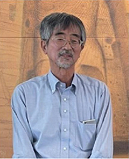
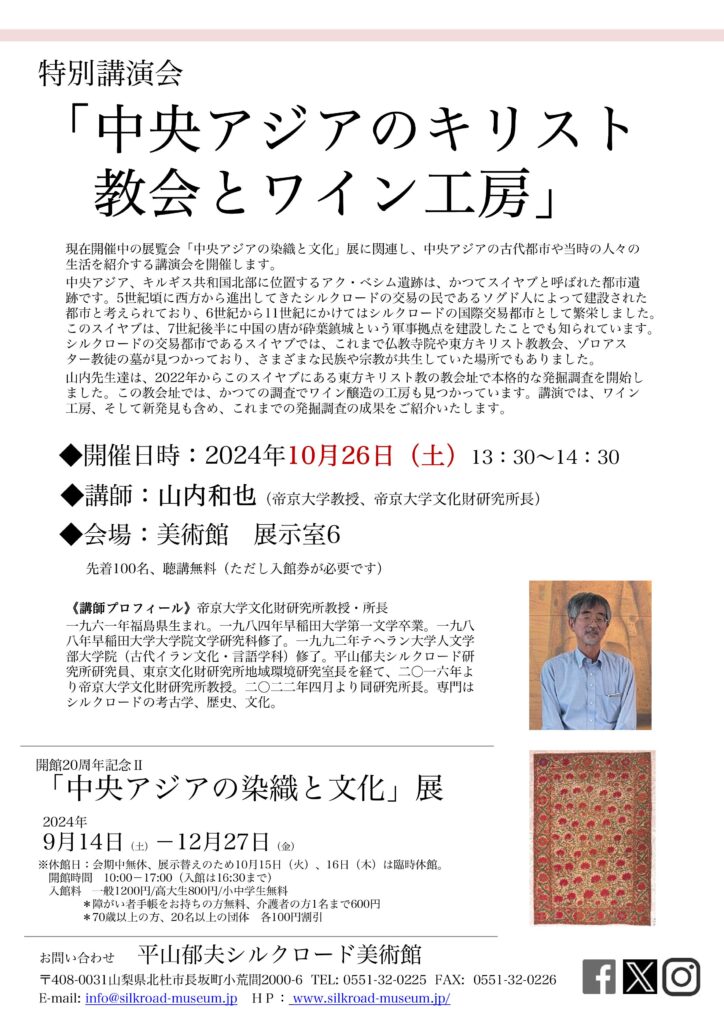
Professor Yamauchi and his team began full-scale excavations in 2022 at the site of the Eastern Christian church in Suyab. A wine-making workshop had also been discovered at this church site during earlier investigations. In this lecture, Professor Yamauchi will introduce the results of excavation research conducted so far, including the wine workshop and new discoveries.
◆ Title: Christian Churches and Wine Workshops in Central Asia
◆ Date and Time: Saturday, October 26, 1:30 p.m. – 2:30 p.m.
◆ Lecturer: Kazuya Yamauchi, Professor at Teikyo University / Director of the Teikyo University Research Institute of Cultural Properties
◆ Venue: Exhibition Room 6, 2nd floor of the museum
◆ Capacity: First 100 participants
◆ Lecture Fee: Free
*However, a museum admission ticket is required.